Printing in clay: the printer is step one, the kiln is the actual business
Makers who want ceramics with a recognisable signature are up against smooth factory ware. Printed layers give a texture no hand can repeat.
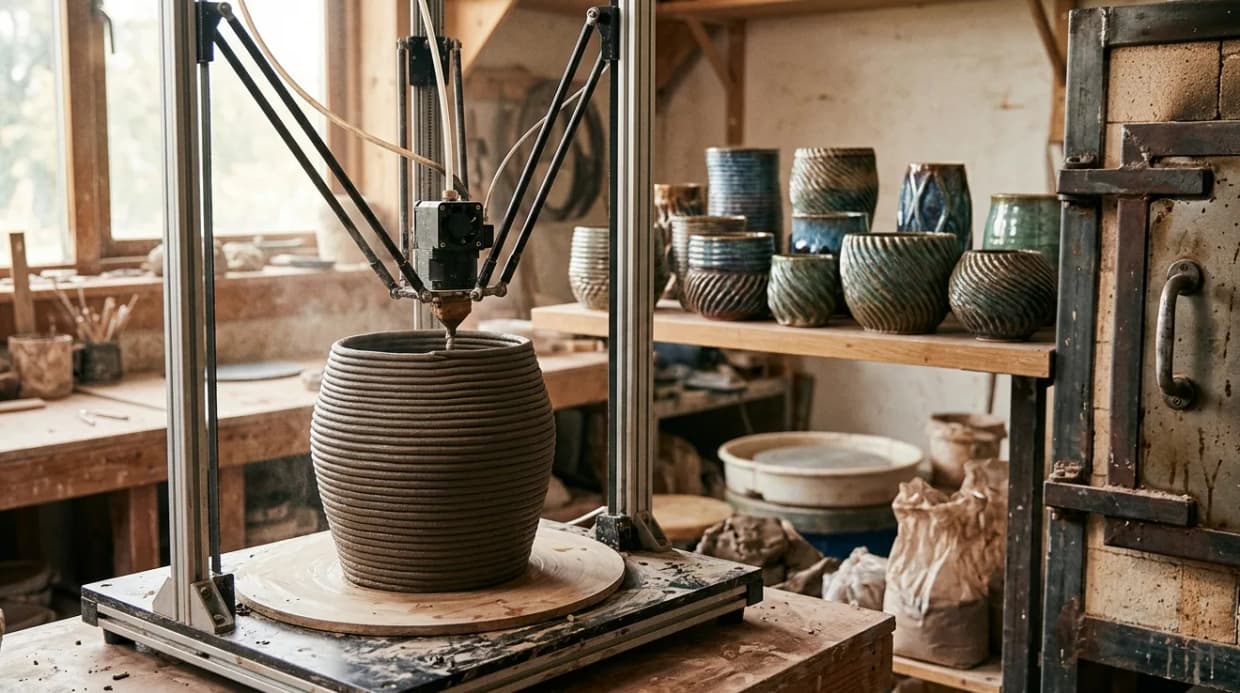
A clay printer extrudes a vessel layer by layer and leaves a regular ridged texture on it, and that texture is the thing people buy. Printing is only the first step, though — controlled drying, a bisque firing, glazing and a glaze firing all come after it. The real barrier is not the machine but the kiln, the drying space, and the losses that only show up once a piece has been fired.
Anyone who wants something on the shelf other than smooth factory ceramics has two routes, and both stall. Hand-thrown work is expensive and every piece comes out slightly different, so you cannot build a range from it or take a repeat order. Slip casting needs a run long enough to pay for the plaster mould, which makes a single piece or a short run a dead end.
💡 Why it works
🌀A texture no hand repeats
The ridges left by each layer are regular and legible, and buyers read them as an honest record of manufacture. Thrown pottery has no such rhythm, and factory ware deliberately removes it. The selling point comes from the technology, not from a lack of skill.
🔓 Unlock the full idea
Keep reading where it starts to get interesting
💎 With Premium (from €24.90)
- Full content of all 774 ideas
- 235 business tools
- 230 vetted franchises
- Business planner with calculators
- Step-by-step playbook, risks, financial breakdowns
Premium from €24.90 · one-time payment
Get Premium →Already have an account?

